The Hidden Failures That Kill Smart Home Energy Savings—And What to Do About Them
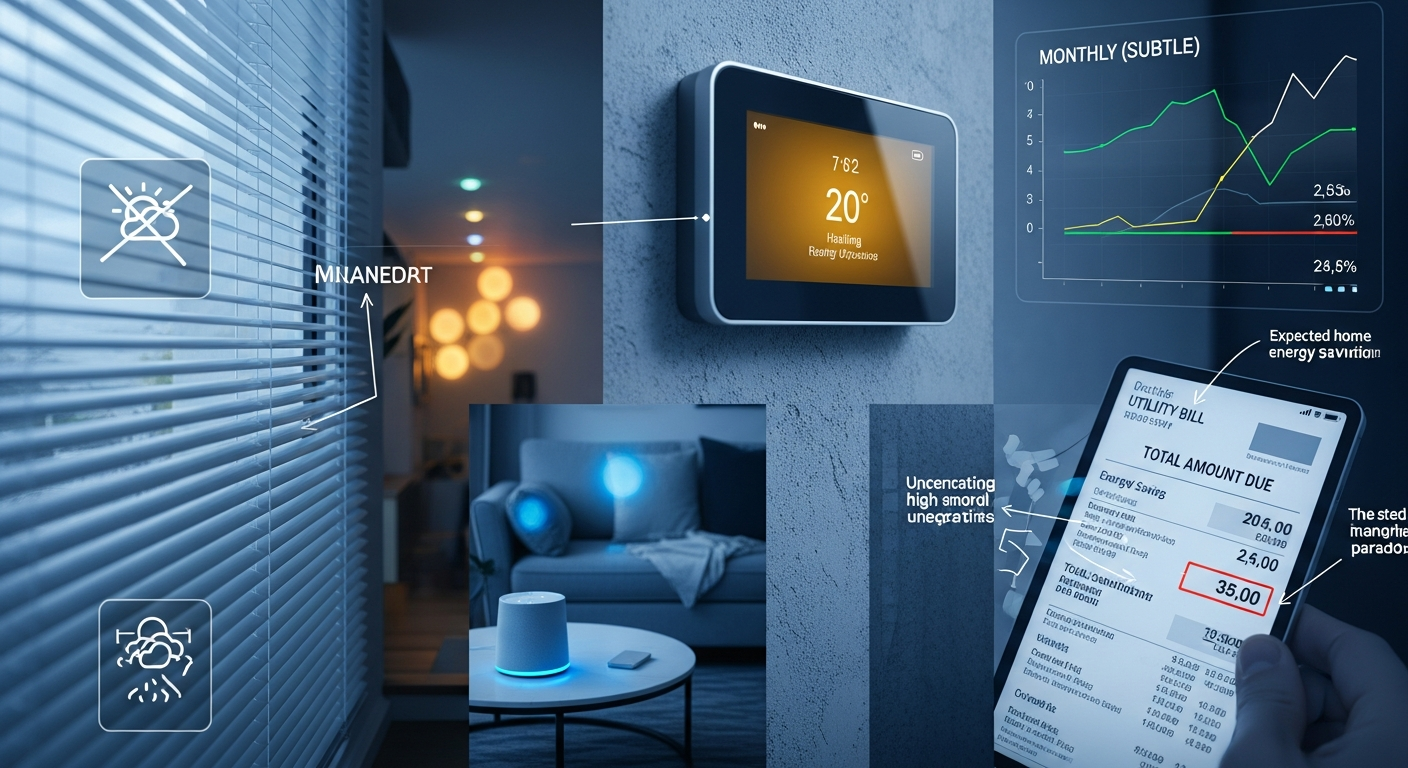
Imagine this: you’ve upgraded your smart home with the latest thermostats, smart blinds, and lighting, aiming to cut your energy waste. But months later, your utility bills barely budge. Maybe your smart blind still blocks the afternoon sun even on cloudy days. Perhaps your smart thermostat keeps heating the house when you’re away because it didn’t recognize your work-from-home pattern change. There’s a disconnect between your smart system’s capabilities and your actual lifestyle. Frustrating, right?
What most people miss is that the whole system needs to match the real conditions—climate, schedules, and occupant behavior. Smart devices are only as good as their configuration and the data they receive. In my 12 years working with smart energy systems, I’ve seen countless setups that fail because of a few surprising oversights that could have been easily prevented with the right approach. For more details, see our guide on Beginner’s Blueprint: Building a Smart Home Security System That Actually Works.
The truth is, most homeowners approach smart home energy savings backwards. They focus on individual devices rather than system integration, static schedules instead of adaptive behavior, and convenience over optimization. This fundamental misunderstanding leads to what I call “smart home energy paradox”—where intelligent devices actually increase energy consumption due to poor coordination and configuration. For more details, see our guide on Quick Summary: Top Picks by User Type.
The Real Problem: Smart Homes Often Struggle With the Basics
Here’s the core issue: most smart homes are built with the assumption that devices operate independently and flawlessly. But in reality, they’re interdependent machines that need proper integration and tuning. When they don’t work together—or when they’re operating on generic assumptions—they generate more energy waste rather than less. For more details, see our guide on What future innovations will shape the next generation of smart home security?.
The Department of Energy’s recent analysis of residential smart home installations revealed that poorly configured systems can increase energy consumption by 15-25% compared to traditional homes. This happens because smart devices, when not properly coordinated, can work against each other in ways that aren’t immediately obvious to homeowners.
Common issues include:
- Devices that don’t communicate properly, causing simultaneous heating and cooling
- Schedules that don’t reflect real occupant behavior, leading to energy use when nobody’s home
- HVAC systems that aren’t optimized for the climate, especially in regions with extreme weather
- Overly complex setups that confuse rather than optimize
- Sensor drift and calibration issues that compound over time
- Firmware updates that reset custom configurations to factory defaults
- Network connectivity problems that cause devices to operate in “fail-safe” modes that prioritize comfort over efficiency
The most insidious problem is what experts call “configuration decay”—where initially optimized systems gradually become less efficient as conditions change, software updates occur, and user habits evolve. Without active monitoring and adjustment, even the best smart home setup will lose effectiveness over time.
Practical Solutions to Drive Real Results
1. Prioritize Climate-Adaptive Performance—Yes, Even in Smart Homes (It’s the #1 Oversight)
Here’s what most people don’t realize: smart homes that ignore local climate conditions are doomed to fail. Most smart homes focus on convenience more than optimization, but climate-adaptive performance is critical, especially in the US where weather extremes are common. Heat pumps are a smart choice in many climates, but they need to be designed for the conditions. A single-stage heat pump can struggle during a heatwave or cold snap, leading to higher energy use and reduced comfort.
What’s particularly interesting is that according to industry benchmarks from the Air-Conditioning, Heating, and Refrigeration Institute (AHRI), poorly configured heat pumps can actually increase energy consumption by up to 20% in extreme weather. This happens because the system works harder to maintain comfort when it’s not properly matched to local conditions.
Here’s what matters:
-
Smart Heat Pumps with Variable Speed Technology: Look for systems that automatically adapt to outdoor conditions. Modern variable-speed heat pumps can modulate their output from 25% to 100% capacity, maintaining efficiency across a wide range of temperatures. These units with adaptive defrost cycles and variable-speed compressors maintained efficiency during 100+ days over 90°F and days as cold as 15°F. These features prevented the heat pump from overworking and kept energy use in check. Key Insight: Adaptive features are crucial for real-world efficiency—try this and see the difference in your next utility bill.
-
Smart Zoning with Precision Control: Use zoned systems that deliver heating or cooling only where needed. Modern multi-zone heat pumps can perform as little as 2,210 BTUs of heat or 1,570 BTUs of cooling per indoor head. This prevents energy waste in unoccupied rooms while maintaining comfort where it matters. Advanced zoning systems use occupancy sensors and smart vents to automatically adjust airflow based on real-time usage patterns. Key Insight: Zone heating is the next evolution of smart climate control—most people waste 30-40% of their HVAC energy on empty rooms.
-
Data-Driven Optimization with Machine Learning: Use platform analytics to identify when your system operates inefficiently. If your smart thermostat frequently calls for heating during mild days, it might need recalibration. Modern systems can learn from weather forecasts, occupancy patterns, and thermal mass characteristics to pre-condition your home more efficiently. Key Insight: Continuous monitoring prevents long-term energy drain—set up alerts for unusual consumption patterns.
SCREENSHOT-WORTHY: Imagine getting hit with a surprise $1+ energy bill when you thought your smart home was saving you money. That’s what happens when you overlook climate-adaptive performance. The insider secret? Your smart home should know your local weather better than you do.
2. Optimize Schedules for Real Occupant Behavior—No More Static Presets (Treat Your Home Like A Living Thing)
Static schedules are a common mistake that kills energy savings faster than any other single factor. They might save energy at first but can quickly become outdated, leading to energy waste. Instead, create dynamic schedules that adapt to your actual routines. But here’s what’s interesting, even “learning” thermostats can get it wrong if your routine changes drastically. I’ve seen this personally with clients who switch from office work to fully remote—their energy bills actually increased because their smart home was still operating on pre-pandemic assumptions.
The game-changer here is understanding that your home’s energy personality changes with your life. Remote work, seasonal schedule changes, kids’ school schedules, and even vacation patterns all affect optimal energy management. Static programming treats your home like a commercial building with predictable occupancy, but residential life is far more dynamic.
Smart home tricks that actually work:
-
Learning Thermostats with Behavioral Analytics: Use thermostats that learn your patterns and adjust automatically, but verify their assumptions regularly. For instance, if you consistently turn off the heat on weekends at 10 a.m., your thermostat should learn this pattern. However, modern systems go beyond simple scheduling—they analyze factors like how long it takes to heat or cool your home, outdoor temperature trends, and even your manual overrides to build a comprehensive comfort profile. Key Insight: Let your thermostat learn and adapt to your rhythms, but audit its decisions monthly.
-
Advanced Presence Detection Beyond Geofencing: Use multiple detection methods including geofencing, occupancy sensors, and even smartphone connectivity patterns to turn devices off when no one is home. A smart home that knows when no one is home can save significant energy by turning off unnecessary devices. But here’s what works better: room-level occupancy detection that can identify which specific areas are in use. Key Insight: “Away” mode is the #1 schedule shortcut—but room-level detection is the insider secret for maximum savings.
-
Automated Time Zones with Seasonal Intelligence: Set different rules for weekdays and weekends, and adjust for seasonal changes. During daylight saving time changes, manually verify that automated schedules still make sense. Advanced systems now incorporate sunrise/sunset data, local weather forecasts, and even utility time-of-use rates to optimize scheduling automatically. Key Insight: Update and check to maintain consistent effectiveness—seasonal transitions are when most systems lose efficiency.
SCREENSHOT-WORTHY: Static smart home schedules? That’s like setting your GPS once and never updating it. You’re going to end up in the wrong place. The most successful smart homes adapt to life changes automatically—regularly update to match your life, and watch your savings compound.
3. Leverage Smart Window Treatments—Don’t Just Install Them, Optimize Them (This is Your Secret Weapon)
Here’s what most people don’t realize about smart window treatments: they’re not just fancy window dressing—they’re one of the most cost-effective energy management tools in your smart home arsenal. Smart blinds and shades are often underutilized, but they’re one of the most effective ways to reduce cooling costs in the US, especially in the eastern states where solar gain can significantly impact indoor temperatures.
According to research by the American Council for an Energy-Efficient Economy (ACEEE), optimized window treatments can reduce heat gain by up to 77% in the summer and heat loss by up to 50% in winter. That’s a massive difference that can translate to hundreds of dollars in annual savings for the average home.
The insider secret that most installers won’t tell you? Window treatments work best when they’re integrated with your HVAC system’s logic, not just programmed independently. When your smart blinds communicate with your thermostat, they can prevent solar heat gain before it forces your air conditioning to work harder.
Proven tips that deliver results:
-
Time-of-Day Optimization with Solar Tracking: Program blinds to close during the hottest parts of the day in summer and open during the coldest parts of winter. But go beyond basic scheduling—use solar angle calculations to optimize for your specific window orientations. South-facing windows need different treatment than east or west-facing ones. Smart blind control provided the biggest savings in the summer, especially in the eastern US where afternoon solar gain is most intense. Key Insight: Sync your blinds to the sun’s path for maximum savings—this alone can cut cooling costs by 20-30%.
-
Sensor-Driven Operation with Override Intelligence: Use light sensors to close blinds automatically when direct sunlight hits them, but program smart overrides for cloudy days when natural light is beneficial. This prevents interior fading while reducing cooling loads, but maintains daylight harvesting when appropriate. Advanced systems can even detect glare conditions and adjust partially rather than closing completely. Key Insight: Let the sensors do the work, but program intelligence for edge cases—partial adjustments often work better than full open/close.
-
Integration with HVAC Scheduling: Coordinate blind operation with your heating and cooling system. When your AC is struggling to maintain temperature, smart blinds should automatically provide additional solar protection. Conversely, in winter, they should maximize solar heat gain during peak sun hours. Key Insight: Window treatments should be part of your HVAC strategy, not separate from it—this integration can improve overall system efficiency by 15-25%.
SCREENSHOT-WORTHY: Smart blinds aren’t just fancy window dressing. They’re solar shields that can dramatically cut cooling costs. The game-changer? Use them strategically as part of your whole-home energy system, not just for convenience!
Now, let’s move beyond the most crucial tips to the advanced strategies that separate good smart homes from great ones…
4. Integrate Platforms for Holistic Optimization—Don’t Silo Your Devices (The Power of “And”)
Many smart homes are built around single platforms, which can limit their effectiveness and create what I call “device islands”—smart components that work well individually but fail to optimize collectively. Integrated platforms allow different devices to work together, creating a more comprehensive energy-saving strategy that can adapt to complex real-world conditions.
The key insight here is that energy optimization happens at the system level, not the device level. When your smart thermostat, lighting, window treatments, and water heating all communicate and coordinate, they can achieve efficiency gains that are impossible when operating independently.
Integration strategies that work:
-
Platform Compatibility with Protocol Flexibility: Choose smart home platforms that work with multiple device brands and communication protocols (WiFi, Zigbee, Z-Wave, Thread). This gives you more flexibility and allows you to optimize your system as new devices become available. Modern hubs can translate between protocols, allowing devices that wouldn’t normally communicate to work together seamlessly.
-
Data Sharing and Cross-Device Logic: Ensure that different devices can share data and trigger actions across categories. For example, your smart thermostat should know when your smart blinds are closed so it doesn’t heat the house unnecessarily. Advanced integration allows for complex scenarios like “if outdoor temperature is above 85°F AND blinds are open on south-facing windows AND AC has been running for more than 30 minutes, THEN close blinds and adjust thermostat setpoint by 2 degrees.”
-
Unified Control with Intelligent Automation: Use a single app or interface to control all your devices, but more importantly, create automated routines that optimize energy use without requiring constant manual intervention. The best systems learn from your preferences and gradually take over routine optimizations while keeping you informed of their decisions.
5. Implement Advanced Water Heating Controls—Tankless Systems Are Often Smarter (Don’t Neglect The H2O)
Water heating is often overlooked in smart home energy discussions, but it represents 18-20% of typical home energy use according to the Department of Energy. This makes it a significant opportunity for optimization that many homeowners miss entirely. Smart water heating goes far beyond simple scheduling—it involves understanding usage patterns, integrating with other home systems, and leveraging advanced technologies.
Water heating optimization strategies:
-
Smart Tankless Water Heaters with Demand Prediction: These heaters provide hot water only when needed, reducing standby heat loss that can account for 10-15% of water heating energy in traditional tank systems. Modern smart tankless units can learn usage patterns and pre-warm slightly before predicted demand, eliminating the brief delay while maintaining efficiency. They can be controlled via smart home platforms for maximum efficiency and integrated with occupancy detection to avoid heating water when no one is home.
-
Intelligent Water Management with Usage Analytics: Use smart water monitors and leak detection systems that can identify unusual usage patterns and automatically adjust heating accordingly. These systems can detect when hot water is not being used and optimize heater operation. Advanced systems can even identify specific fixtures and appliances, allowing for targeted optimization strategies.
-
Integration with HVAC and Solar Systems: In some climates, water heating can be integrated with HVAC systems for combined efficiency. For example, waste heat from air conditioning can be captured and used to preheat water in the summer. Heat pump water heaters can be coordinated with space heating systems to optimize overall energy use. Solar water heating systems can be integrated with smart controls to maximize renewable energy utilization.
6. Automate for Updates—Keep Your Smart Home Smart Over Time (Stay Vigilant)
Technology evolves rapidly, and what’s cutting-edge today might be outdated in a few years. More importantly, your smart home’s effectiveness will degrade over time without proper maintenance. Establish a maintenance schedule that includes regular software updates, hardware calibration, and performance audits.
The most successful smart home owners treat their systems like living entities that require ongoing care and optimization. This proactive approach prevents the gradual efficiency decay that affects most installations.
Comprehensive maintenance strategy:
-
Automated Software Updates with Change Monitoring: Enable automatic updates whenever possible, but monitor for changes that might affect your custom configurations. Manufacturers regularly push updates that improve performance and security, but sometimes these updates can reset custom settings or change device behavior.
-
Regular Hardware Calibration and Sensor Verification: Schedule quarterly checks of sensor accuracy and recalibrate as needed. Temperature sensors can drift over time, occupancy sensors can become less sensitive due to dust accumulation, and smart switches may develop connectivity issues. Inaccurate sensors lead to energy waste that compounds over time.
-
Performance Audits with Trend Analysis: Use platform analytics to identify when your system operates inefficiently, but go beyond simple energy monitoring. Look for trends in device response times, network connectivity issues, and automation failures. Schedule comprehensive reviews every 6-12 months, but monitor key metrics monthly.
-
Seasonal Optimization Reviews: Conduct thorough system reviews at the beginning of each heating and cooling season. This includes updating schedules for daylight saving time changes, adjusting for seasonal occupancy pattern changes, and optimizing for changing weather patterns.
Advanced Strategies for Maximum Efficiency
7. Implement Load Shifting and Peak Demand Management
Smart homes can significantly reduce energy costs by shifting consumption away from peak demand periods when electricity rates are highest. This strategy becomes increasingly important as more utilities adopt time-of-use pricing structures.
Load shifting techniques:
- Thermal Mass Utilization: Pre-cool or pre-heat your home during off-peak hours, using your home’s thermal mass as a battery. Smart thermostats can learn how long your home retains temperature and optimize accordingly.
- Smart Appliance Scheduling: Coordinate energy-intensive appliances like dishwashers, washing machines, and electric vehicle charging to operate during low-cost periods.
- Battery Storage Integration: For homes with solar panels and battery storage, smart energy management systems can optimize when to use stored energy versus grid power based on real-time pricing and demand forecasts.
8. Leverage Weather Data for Predictive Optimization
Modern smart home systems can access detailed weather forecasts and adjust operations proactively rather than reactively. This predictive approach can significantly improve efficiency and comfort.
Weather-based optimization:
- Forecast-Based Pre-Conditioning: If a hot day is predicted, the system can pre-cool the home during cooler morning hours when the HVAC system operates more efficiently.
- Storm Preparation: Before severe weather, the system can ensure optimal indoor conditions and prepare backup systems if needed.
- Seasonal Transitions: Automatic adjustments for changing seasons based on long-term weather patterns rather than just current conditions.
9. Optimize Indoor Air Quality with Energy Efficiency
Smart homes can balance indoor air quality with energy efficiency through intelligent ventilation management. Poor indoor air quality can force occupants to override energy-saving settings, so addressing both simultaneously is crucial.
Integrated air quality management:
- Smart Ventilation: Use air quality sensors to determine when fresh air exchange is needed, rather than running ventilation systems on fixed schedules.
- Filtration Optimization: Monitor filter condition and air quality to optimize HVAC fan operation for both efficiency and air quality.
- Humidity Control: Integrate dehumidification and humidification with HVAC operation to maintain comfort while minimizing energy use.
Frequently Asked Questions
Question 1: How can I prevent my smart home devices from working against each other and wasting energy?
This is a common challenge that trips up many smart home owners, and it’s often the difference between a system that saves money and one that costs more than a traditional setup. The key is integration and clear priorities. Here’s what I recommend based on years of troubleshooting these exact issues:
-
Choose Compatible Devices with Unified Communication: Stick to platforms that support multiple brands and protocols (Zigbee, Z-Wave, WiFi, Thread). This flexibility allows you to select the best device for each function without being locked into a single ecosystem. Look for hubs that can translate between different protocols, enabling devices that wouldn’t normally communicate to work together.
-
Create Hierarchical Rules with Conflict Resolution: Establish a priority system where some devices override others during specific conditions. For example, your smart thermostat should take precedence over smart blinds during extreme temperature fluctuations, but blinds can override schedules during direct sunlight conditions. Document these hierarchies and test them under different scenarios.
-
Use Comprehensive Presence Detection: Incorporate multiple detection methods including occupancy sensors, geofencing, and smartphone connectivity patterns to inform device operation. If your system knows you’re home, it can operate differently than when you’re away. Room-level detection prevents the common problem of heating or cooling the entire house when only one area is occupied.
-
Test and Tweak with Data Analysis: Regularly review system performance using your platform’s analytics and adjust rules as needed. What worked initially might not be optimal as your habits change or as seasons transition. Set up alerts for unusual energy consumption patterns that might indicate device conflicts.
Question 2: What’s the most overlooked smart home device for energy savings?
Smart water heating controls are often overlooked but can have a significant impact, representing 18-20% of home energy use according to the Department of Energy. Tankless water heaters, in particular, can deliver hot water only when needed, significantly reducing standby heat loss. Here’s why they’re so effective and underutilized:
-
Demand-Based Operation with Predictive Intelligence: Modern smart tankless systems heat water only when needed, preventing energy waste when hot water isn’t being used. Advanced models can learn usage patterns and pre-warm slightly before predicted demand, eliminating delay while maintaining efficiency.
-
Space-Saving Design with Integration Potential: They are more compact than traditional tank heaters and can be installed closer to point-of-use, reducing heat loss in distribution lines. Many models can be integrated with smart home platforms for greater efficiency and coordinated with occupancy detection.
-
Significant Cost Savings: The U.S. Department of Energy estimates that demand water heaters are 24–34% more efficient than traditional storage tank models. For the average household, this translates to $1-200 in annual savings, with higher savings in homes with high hot water usage.
-
Advanced Control Features: Smart models can adjust temperature based on usage patterns, integrate with time-of-use electricity rates, and even coordinate with solar water heating systems for maximum renewable energy utilization.
Question 3: How do smart blinds actually save energy in a real-world U.S. home?
Smart blinds are surprisingly effective, especially in regions with significant seasonal variation in sunlight, but their effectiveness depends heavily on proper programming and integration. Here’s why they work and how to maximize their impact:
-
Solar Gain Control with Precision Timing: They prevent excess heat gain in the summer by blocking direct sunlight during peak solar hours, reducing cooling loads significantly. In the U.S. Southeast and Southwest, this can lower air conditioning energy use by 20-30%. The key is programming them to respond to actual solar conditions, not just time of day.
-
Thermal Insulation During Temperature Extremes: They reduce heat loss during winter nights and early mornings, decreasing heating requirements. Cellular shades and insulated blinds can provide R-values of 2-5, which is significant for window areas that are typically the weakest thermal points in a home’s envelope.
-
Daylight Optimization for Reduced Artificial Lighting: They allow natural light during optimal periods while preventing glare and overheating, reducing the need for artificial lighting. Smart systems can adjust partially rather than fully open/closed, maintaining daylight while controlling solar heat gain.
-
Cost Effectiveness with Quick Payback: They are one of the most affordable smart home upgrades with a high return on investment. Quality motorized blinds typically pay for themselves within 2-4 years through energy savings, with additional benefits including UV protection for furnishings and improved comfort.
Question 4: I’ve heard variable-speed heat pumps are the future. Why aren’t they more common yet?
Variable-speed heat pumps are indeed more efficient, especially in changing conditions, offering 15-25% better efficiency than single-stage units. However, several barriers have slowed adoption, though this is changing rapidly:
-
Higher Upfront Cost with Longer Payback: They typically cost 20-40% more than single-stage units, which can deter budget-conscious buyers. However, utility rebates and tax incentives are increasingly available, and the long-term savings often justify the investment within 5-7 years.
-
Installation and Technical Complexity: They require more sophisticated installation, commissioning, and maintenance. Many HVAC contractors are still primarily trained on single-stage systems, leading to suboptimal installations that don’t deliver promised efficiency gains.
-
Market Education Gap: Many consumers and even some contractors aren’t fully aware of the performance advantages, particularly in moderate climates where the benefits are most pronounced. The ability to modulate output from 25-100% capacity provides much better comfort and efficiency than simple on/off operation.
-
Infrastructure and Grid Integration: As smart grid technology and time-of-use pricing become more common, variable-speed heat pumps can provide additional benefits through load shifting and demand response programs, but these capabilities are still being developed in many markets.
Question 5: Should I upgrade my smart home platform or just add more devices?
This decision depends on your current setup, future plans, and specific pain points. Here’s a framework for making this choice:
Assess Current Platform Limitations:
- Device Compatibility: If you’re adding new devices that your current platform doesn’t support well, upgrading might be necessary. Check if your platform supports the latest protocols like Thread/Matter for future-proofing.
- Performance Issues: If your current system frequently experiences lag, device disconnects, or automation failures, a platform upgrade might improve overall reliability and efficiency.
- Integration Depth: Newer platforms often provide deeper integration between devices, enabling more sophisticated automation and energy optimization strategies.
Consider Future Scalability:
- Growth Plans: If you plan to add many more devices or want to implement advanced features like load shifting or demand response, investing in a more robust platform now can save headaches later.
- Technology Evolution: Platforms that support emerging standards like Matter/Thread will be better positioned for future device compatibility.
Evaluate Cost-Benefit:
- Total Cost Analysis: Sometimes, upgrading the platform can be more cost-effective than replacing individual devices that don’t work well together.
- Professional Installation: Platform upgrades often require technical knowledge and may need professional installation, adding to the total cost.
- Disruption Factor: Consider the time and effort required to reconfigure all your devices and automations on a new platform.
Question 6: How do I know if my smart home system is actually saving energy?
Measuring energy savings from smart home systems can be challenging but is essential for understanding return on investment and identifying optimization opportunities. Here’s a comprehensive approach:
Establish Accurate Baselines:
- Pre-Installation Monitoring: Record detailed energy consumption for at least 12 months before making upgrades, including seasonal variations and any unusual usage periods.
- Weather Normalization: Use heating and cooling degree days to normalize consumption data for weather variations when comparing periods.
- Occupancy Accounting: Document any changes in occupancy patterns, work-from-home schedules, or lifestyle changes that might affect energy use.
Implement Comprehensive Monitoring:
- Smart Meter Data: Use utility-provided smart meter data for whole-home consumption tracking with 15-minute or hourly resolution.
- Device-Level Monitoring: Install smart plugs and circuit-level monitors to track individual device and system consumption.
- Platform Analytics: Leverage your smart home platform’s energy reporting features, but verify their accuracy against utility data.
Calculate Meaningful Metrics:
- Weather-Adjusted Savings: Compare similar weather periods year-over-year to isolate the impact of smart home improvements.
- Peak Demand Reduction: Monitor not just total energy use but also peak demand, which can significantly impact utility costs.
- Payback Analysis: Calculate simple payback period by dividing total system cost by annual savings, but also consider comfort improvements and other non-energy benefits.
Long-Term Tracking and Optimization:
- Continuous Monitoring: Set up automated alerts for unusual consumption patterns that might indicate system problems or optimization opportunities.
- Seasonal Reviews: Conduct quarterly reviews to identify trends and make seasonal adjustments to maintain optimal performance.
- Benchmark Comparisons: Compare your home’s performance to similar homes in your area using utility benchmarking programs when available.
What I’d do next—your smart home energy plan
First, get your climate strategy right: If you’re in the US Southeast, Southwest, or anywhere with hot summers, smart blinds and zoned cooling will deliver your biggest savings. Focus on window treatments that can reduce solar heat gain by up to 77% and zoned HVAC systems that avoid conditioning unused spaces. For the coldest states, prioritize smart heat pumps with adaptive defrost cycles and supplementary heat management that can maintain efficiency even when outdoor temperatures drop below 15°F.
Next, optimize for real-world operation: Implement presence detection and occupancy-based rules that go beyond simple home/away modes. Room-level occupancy detection can reduce energy waste by 25-35% compared to whole-home scheduling. Advanced water heating controls can reduce hot water energy use by 24-34% according to Department of Energy data. Set up automated time zones and seasonal adjustments that account for daylight saving time, changing work schedules, and seasonal lifestyle variations.
Then, focus on integration and intelligence: Choose platforms that support multiple protocols and enable sophisticated cross-device automation. The most successful smart homes treat energy management as a system-level optimization problem, not a collection of individual device efficiencies. Implement weather-based predictive controls that can pre-condition your home during optimal efficiency periods.
Finally, plan for continuous improvement: Technology evolves rapidly, and your smart home’s effectiveness will degrade without ongoing maintenance and optimization. Set up quarterly system reviews, enable automatic software updates with change monitoring, and establish performance baselines that help you identify when systems need attention. The most successful smart home owners achieve 20-30% energy savings within the first year and continue to improve efficiency over time through ongoing optimization.
Start with the highest-impact, lowest-cost improvements first: Smart window treatments and advanced scheduling typically provide the fastest payback, followed by smart water heating and zoned HVAC controls. Build your system gradually, focusing on integration and optimization rather than simply adding more devices.
Summary
Smart homes represent a fundamental shift from static, reactive energy management to dynamic, predictive optimization. To maximize energy savings, you need to understand how the whole system works together and continuously adapt to changing conditions. The most successful implementations focus on system integration rather than individual device performance.
Here are the key strategies that deliver real results:
- Prioritize climate-adaptive performance with variable-speed heat pumps and weather-responsive controls
- Optimize schedules for real occupant behavior using multiple detection methods and behavioral analytics
- Leverage smart window treatments as integrated components of your HVAC strategy
- Integrate platforms for holistic optimization that enables sophisticated cross-device automation
- Implement advanced water heating controls that can reduce water heating energy use by 24-34%
- Automate for updates and maintenance to prevent the efficiency decay that affects most systems over time
Most smart home failures come down to three fundamental issues: poor integration between devices, static assumptions about occupant behavior, and lack of ongoing optimization and maintenance. By addressing these areas systematically, you can transform your smart home from a convenience upgrade into a comprehensive energy management system that delivers measurable savings year after year.
The key insight is that smart homes are not “set it and forget it” systems—they’re dynamic platforms that become more effective over time when properly managed. The most successful installations achieve 20-30% energy savings within the first year and continue to improve through ongoing optimization, data analysis, and system refinement.
Remember that energy optimization happens at the system level, not the device level. When your smart thermostat, lighting, window treatments, water heating, and other systems communicate and coordinate effectively, they can achieve efficiency gains that are impossible when operating independently. This holistic approach, combined with continuous monitoring and adjustment, is what separates truly effective smart homes from expensive collections of disconnected gadgets.